
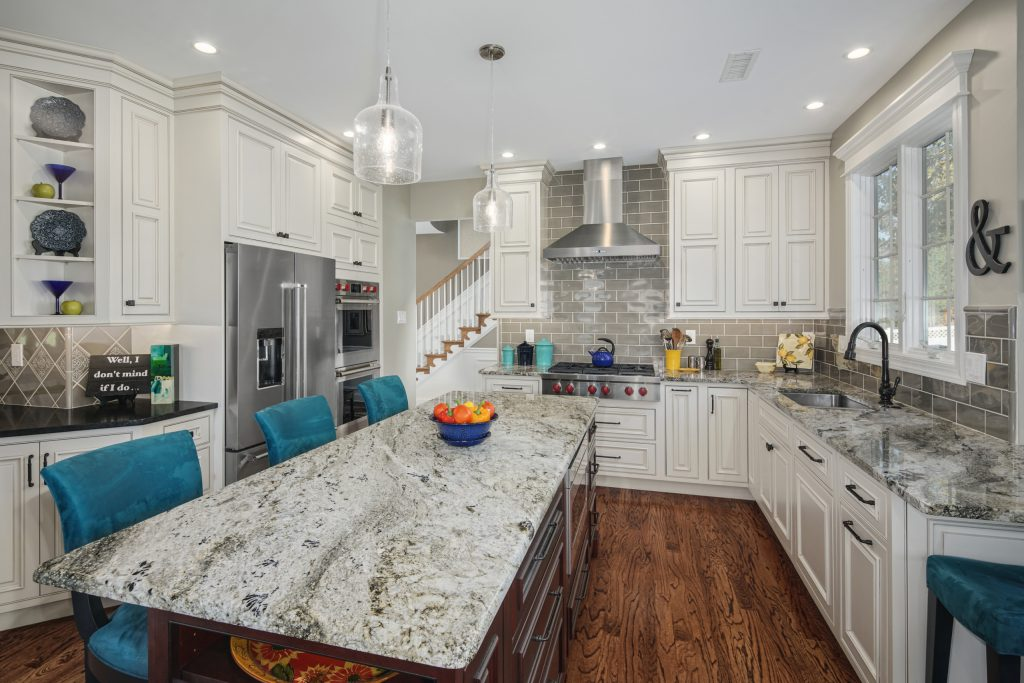
Most granite countertops are fabricated from either 2 cm or 3 cm slabs, but the better choice depends on more than appearance. Granite countertop thickness affects support planning, edge options, cabinet conditions, overhangs, and how the finished surface feels in the room.
A thicker slab is not automatically better, and a thinner slab is not automatically weak. This guide explains the practical differences between 2 cm and 3 cm granite so you can choose the right fit for your project.
What Is the Standard Granite Countertop Thickness?
The two most common granite countertop thickness options are 2 centimeters and 3 centimeters.
A 2 cm granite countertop is about three-quarters of an inch thick. A 3 cm granite countertop is about one and one-quarter inches thick. These measurements describe the slab itself, not a built-up or decorative edge added during fabrication.
Neither option is automatically right for every project. Slab availability can vary by stone selection, and the countertop layout may affect which thickness makes the most sense.
Before choosing, consider where the granite will be installed, how the cabinets are built, and whether the design includes large cutouts or overhangs. Your fabricator can review those details and confirm which standard granite thickness fits the project.
2 cm vs. 3 cm Granite Countertops
The main difference between 2 cm vs. 3 cm granite is the thickness of the slab, but that choice also affects the finished profile, support plan, and edge design.
2 cm Granite
A 2 cm granite countertop is about three-quarters of an inch thick. Its slimmer profile can work well in bathrooms, smaller kitchens, and designs where a lighter line fits the cabinetry.
Depending on the layout, 2 cm granite may require a plywood subtop or another planned support system. Large cutouts, long spans, and overhangs can change those requirements. A built-up edge may also be used when the design calls for a thicker appearance.
The added support beneath a 2 cm slab can affect the finished countertop height. That detail should be reviewed when coordinating appliances, cabinet panels, and surrounding trim.
3 cm Granite
A 3 cm granite countertop is about one and one-quarter inches thick. It creates a more substantial edge without adding a separate built-up detail.
Three-centimeter granite can often be installed without a full plywood subtop, but that does not mean every layout is self-supporting. Islands, seating overhangs, wide spans, sink cutouts, and cabinet conditions still need to be reviewed.
A 3 cm slab is also heavier. The base cabinets must be level, stable, and ready to carry the finished countertop.
The better option depends on the available slab, the countertop layout, and the finished look you want. Thickness should be part of the fabrication plan, not a decision made from appearance alone.
Does Thicker Granite Mean a Stronger Countertop?
A thicker granite slab contains more material and may provide greater rigidity, but thickness alone does not determine how the countertop will perform.
Several details matter just as much:
- the characteristics of the individual slab
- the location of natural veining and fissures
- cabinet condition and levelness
- seam placement
- sink and cooktop cutouts
- unsupported spans and overhangs
- fabrication, handling, and installation
Cutouts create narrower sections of stone around sinks and cooktops. Those areas need careful layout and handling regardless of the slab thickness.
Overhangs also require project-specific planning. A 3 cm slab may still need brackets, corbels, or another support method when the span extends beyond what the layout and stone can safely carry.
The practical question is not simply which slab is thicker. It is whether the granite countertop support plan matches the stone, cabinetry, cutouts, and finished layout.
How Granite Thickness Changes the Finished Edge
Thickness changes how the countertop relates to cabinets, islands, and nearby architectural details.
A 2 cm slab creates a slimmer profile. That can fit kitchens and bathrooms with lighter cabinetry, narrow vanities, or a clean, restrained design.
A 3 cm slab has more visual weight. It may work well on a large island, substantial cabinetry, or a layout where the countertop needs a stronger presence.
The edge profile also affects how thick the surface appears. A simple eased or beveled edge keeps the slab close to its natural profile. A decorative ogee or rounded edge can make the front of the countertop feel more detailed.
The slab and edge should be selected together. A profile that looks balanced on 3 cm granite may feel crowded on a thinner slab, while a simple edge can work across either thickness.
Reviewing granite countertop edge profiles can help narrow the direction before fabrication begins.
Laminated and Mitered Edges Are Not the Same
A countertop can look thicker than the original slab, but the fabrication method matters.
A laminated edge, sometimes called a built-up edge, adds a strip of matching stone beneath the front edge. The extra layer creates a thicker visible profile. The fabricator must align the pieces carefully, especially when the granite has strong movement or a directional pattern.
A mitered edge joins stone pieces at an angle, usually along the front and lower face. This creates a box-like edge that can appear much thicker than the slab.
These terms should not be used interchangeably. They describe different cuts, joints, and fabrication methods.
Not every slab or project is suited to every edge treatment. Stone pattern, cabinet design, corner conditions, fabrication scope, and installation access can all affect the recommendation. Confirm the edge construction before approving the final layout.
How to Choose the Right Granite Thickness
Start with the actual project rather than choosing thickness from a showroom sample alone.
Confirm Slab Availability
Not every granite is stocked or produced in both thicknesses. If a specific color or pattern is the priority, confirm which granite slab thickness is available before building the rest of the design around it.
Review the Application
A kitchen island, perimeter countertop, bathroom vanity, or commercial surface may have different support and appearance needs. The same thickness does not have to be used for every possible application.
Check the Cabinets
Cabinets should be level, stable, and properly installed before templating. A thinner slab may need additional support, while a thicker slab adds more weight to the cabinet structure.
Map Cutouts and Overhangs
Identify sinks, cooktops, seating areas, long spans, and corner conditions early. These details can affect seam placement, reinforcement, support, and handling.
Choose the Edge With the Slab
The edge profile changes how the thickness looks from across the room. Decide whether you want the true slab thickness visible or a built-up appearance.
Account for Finished Height
Subtops, edge treatments, and cabinet construction can affect the final countertop height. Review appliance clearances and nearby trim before fabrication.
Complete Accurate Site Measurements
Digital templating captures the finished cabinet layout, walls, angles, and cutout locations. Those measurements give the fabricator the information needed to plan the slab, seams, edges, and installation.
Confirm the Details Before Fabrication
The right granite thickness should fit the slab, cabinet structure, layout, edge design, and support plan.
Cutstone helps Alabama homeowners review those details through slab selection guidance, digital templating, in-house fabrication, and professional installation. Visit Cutstone in Alabaster or request a quote to discuss the granite, layout, and finished edge before fabrication begins.
Frequently Asked Questions About Granite Countertop Thickness
How thick are granite countertops?
Most granite countertops are fabricated from 2 cm or 3 cm slabs.
Two-centimeter granite is about three-quarters of an inch thick. Three-centimeter granite is about one and one-quarter inches thick. The visible edge may appear thicker if the design includes a laminated, built-up, or mitered treatment.
Is 2 cm or 3 cm granite better?
Neither thickness is better for every project.
Two-centimeter granite provides a slimmer profile and may work well for vanities or lighter designs. Three-centimeter granite creates a more substantial edge and may require less continuous support in some layouts.
The choice should account for slab availability, cabinetry, cutouts, overhangs, edge design, and fabrication requirements.
Does 2 cm granite need plywood underneath it?
Two-centimeter granite often uses a plywood subtop or another support method, but the requirement depends on the project.
Cabinet construction, countertop spans, sink and cooktop cutouts, edge design, and local fabrication practices can all affect the support plan. The fabricator and installer should confirm what is needed for the specific layout.
Can granite countertops be made to look thicker?
Yes. A fabricator may create a thicker-looking edge by adding a matching stone strip or using another built-up edge method.
A mitered edge can also create a deeper front profile through angled joints. The right method depends on the stone pattern, selected edge, cabinet design, and the fabricator’s approved approach.
Does granite thickness affect the edge profile?
Yes. The slab thickness changes the proportions of the finished edge.
Simple profiles such as eased and beveled edges can work on both 2 cm and 3 cm granite. More detailed profiles may need enough material to show the shape clearly. A fabricator can confirm which options suit the selected slab and thickness.
Does 3 cm granite ever need extra support?
Yes. A 3 cm slab may still need additional support around long overhangs, wide spans, large cutouts, or layouts with limited cabinet contact.
The slab thickness is only one factor. Stone characteristics, seam placement, cabinetry, overhang depth, and installation conditions should all be reviewed before the support plan is finalized.