
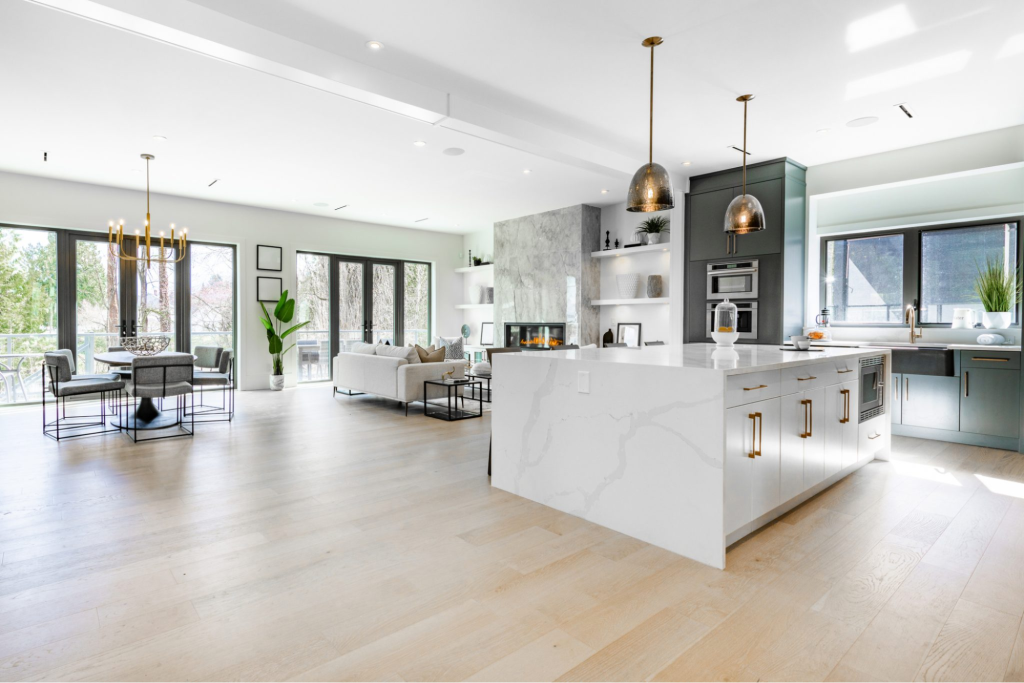
To choose a countertop color, start with the finishes already fixed in your kitchen: cabinets, flooring, backsplash, and lighting. Then decide whether the countertop should blend with those elements or create contrast.
The key is undertone, not just the color name. A white slab can lean warm, cool, or neutral, and each option will read differently in the room. This guide explains how to compare undertones, test samples, and use two countertop colors without making the kitchen feel disconnected.
Start With Undertones, Not Just Color Names
The main color catches your eye first, but the undertone determines how the countertop works with the rest of the kitchen.
Warm surfaces may contain cream, beige, gold, brown, or muted red. Cool surfaces often lean toward blue, green, charcoal, or crisp gray. Neutral undertones fall between the two and can be easier to pair with existing finishes.
This explains why two white slabs can look completely different beside the same cabinet. One may appear soft and creamy. Another may look bright and slightly blue. Gray can also lean warm toward taupe or cool toward blue.
Look beyond the slab’s main shade. Its background, veining, and smaller color details often decide whether the whole kitchen feels connected.
Read the Colors Already Fixed in the Kitchen
Before choosing a countertop, identify which finishes will remain in the room.
Start with the largest fixed elements:
- cabinet paint or wood tone
- flooring
- existing backsplash
- wall color
- appliances
- hardware and plumbing finishes
Do not assume a cabinet is simply white, gray, or brown. White paint may have a creamy yellow base or a sharper blue undertone. Oak can lean honey, orange, red, or muted brown. Gray cabinets may contain blue, green, violet, or beige.
Place countertop samples directly beside these finishes. Comparing selections separately, or looking at them only on a screen, makes undertone conflicts harder to spot.
Every color does not need to match. A smaller shade from the countertop pattern can connect the surface to the cabinets, floor, or backsplash and make the combination feel intentional.
Decide Whether the Countertop Should Blend In or Lead
A countertop can quietly support the kitchen or become its main focal point.
Choose a quieter pattern when the cabinets, backsplash, flooring, or architectural features already draw attention. A controlled surface gives those details space without making the room feel busy.
A slab with stronger veining, deeper color, or more movement can work well when the surrounding finishes are simple. An island is often a natural place for that statement because it already sits near the center of the room.
Avoid making every finish equally bold. Decide what should attract attention first, then choose the surrounding colors and patterns to support it.
How to Mix Warm and Cool Countertops
Warm and cool tones can share the same kitchen. The combination works best when one surface leads and a repeated color connects the palette.
Choose One Surface as the Anchor
If you are using two countertop colors, decide which one should attract attention first.
A quartzite, granite, or marble with noticeable movement can make the island the focal point. A quieter perimeter surface can support it without competing.
The reverse can also work. Dark perimeter countertops can frame the cabinetry, while a lighter island may help the center of the room feel more open.
Each surface should have a clear purpose rather than looking like a last-minute substitution.
Use Veining as a Bridge
Two surfaces do not need to match exactly. Look for smaller colors in the veining or pattern that relate to other finishes in the room.
For example, a light stone with gray movement and soft gold details may pair with cool painted cabinets and warm wood flooring. The gray relates to the cabinets, while the gold picks up the floor.
Mixed veining can help warm and cool elements feel connected without forcing the entire kitchen into one color family.
Separate the Island and Perimeter
Two-tone countertops usually look most intentional when the material change follows the kitchen layout.
Using one surface on the island and another along the perimeter creates a natural boundary. Changing materials in the middle of an uninterrupted countertop run can be harder to make cohesive.
You can also create contrast without combining two bold patterns. A light and dark surface from the same general color family may provide enough difference while keeping the kitchen calm.
Consider Material, Pattern, and Finish
Color is only one part of the selection. Material, pattern scale, and finish can all change how a countertop looks after installation.
Natural stone such as granite, marble, and quartzite varies across the slab. A small sample may show only one area of the background or veining. The full surface may contain stronger movement, mineral deposits, or shifts in tone.
Engineered quartz generally has a more controlled pattern, although large-scale designs may still look different across a full countertop run.
The finish also affects color. A polished surface reflects more light and can make colors and patterns appear sharper. Honed and leathered finishes reduce glare, which may soften contrast and make darker shades appear more muted.
Review the available types of countertop finishes before making a decision based on color alone.
Test the Combination Before Fabrication
Review countertop samples in the room where the surface will be installed whenever possible.
Place each option beside the cabinets, flooring, backsplash, and paint. Check it during the morning, afternoon, and under the kitchen’s artificial lighting. Warm bulbs may bring out cream and gold tones. Cooler bulbs can make gray or blue undertones more noticeable.
View the sample horizontally as well. A color may read differently when the surface lies flat instead of standing upright under showroom lighting.
For natural stone, review the full slab before fabrication. Look at areas with stronger movement and discuss how the pattern may fall around the sink, seams, island, and perimeter.
Countertop Colors for Common Cabinet Finishes
These pairings offer a useful starting point, but the actual samples and room lighting should guide the final choice.
- Crisp white cabinets: Consider gray, charcoal, blue-gray, or white with cool veining. Compare creamy surfaces carefully because they may make a blue-based white cabinet appear cooler.
- Warm white or cream cabinets: Beige, taupe, warm white, and gold-veined stone can reinforce the softer palette. Check very bright blue-white surfaces beside the cabinet before committing.
- Oak or warm wood cabinets: Cream, warm gray, black, green-gray, and mixed veining can all work. First determine whether the wood leans yellow, orange, red, or brown.
- Gray cabinets: Warm white, charcoal, taupe, or mixed veining can create contrast. Identify whether the cabinet gray leans blue, green, or beige.
- Dark cabinets: Light neutral stone can create a strong contrast. A darker surface may also work when the room has enough light and the palette remains controlled.
- Green or blue cabinets: White, cream, gray, black, or stone with related veining can support the cabinet color. Keep the flooring and backsplash from introducing too many competing tones.
After narrowing the color direction, compare different countertop stone types. Appearance matters, but maintenance, performance, and daily use should also shape the material decision.
Bring the Full Kitchen Palette Together
The right countertop color connects the kitchen without making every finish look the same.
Start with the fixed elements, identify their undertones, and decide where you want contrast. Then compare the material, pattern, finish, and full slab under the lighting in your home.
Cutstone helps Alabama homeowners move from early color ideas to a finished countertop through slab selection guidance, in-house fabrication, and professional installation. Visit us in Alabaster or request a quote to compare options for your kitchen.
Frequently Asked Questions About Countertop Colors
Can you mix warm and cool tones in a kitchen?
Yes. Warm and cool tones can work together when the combination includes a shared color or undertone.
A countertop with gray and gold movement, for example, may connect cool cabinets with warm wood flooring. Keep one surface or color family more dominant so the kitchen feels coordinated rather than divided.
What countertop colors work with white cabinets?
White cabinets can work with white, gray, black, beige, taupe, and patterned natural stone.
The best direction depends on the cabinet’s undertone. A warm white cabinet may pair more easily with cream or gold-veined stone. A crisp, blue-based white may work better with cooler gray or clean white surfaces.
What countertop colors work with oak cabinets?
Cream, warm white, soft gray, black, green-gray, and mixed neutral veining can all work with oak.
Check whether the wood leans honey, orange, red, or brown before selecting the countertop. Comparing the sample directly against the cabinet gives you a more reliable result than choosing from memory.
Should an island countertop match the perimeter?
No. The island can use a different countertop when the material change follows the layout and serves a clear design purpose.
A stronger pattern can make the island the focal point, while a quieter perimeter surface supports it. Repeating at least one color or undertone between the two selections can help them feel related.
Does the finish change how a countertop color looks?
Yes. A polished finish reflects more light and often makes colors and patterns look sharper.
Honed and leathered finishes reduce reflection, which can soften contrast and make the surface appear more muted. Compare finish samples under the lighting planned for the kitchen before making the final decision.
Should countertops be lighter or darker than cabinets?
Either approach can work.
A lighter countertop can create contrast with dark cabinets and brighten the work surface. A darker countertop can add definition beside light cabinets. The better choice depends on the room’s lighting, size, surrounding finishes, and the role you want the countertop to play.